The World Public Service Excellence Awards exists for one purpose: to make outstanding public service visible. We are the independent, globally judged awards for excellence that government organisations, departments and individual public servants measure themselves against.

Excellence in the private sector is rewarded instantly — by customers, markets and investors. Excellence in the public sector is too often invisible. A government department can transform waiting times, a municipality can reinvent citizen services, a civil servant can quietly save a national programme, and the world rarely notices. The World Public Service Excellence Awards was founded to correct that imbalance.
Our mission is to identify, verify and celebrate the highest standards of public service worldwide. Through rigorous, criteria-based judging, we turn internal achievements into internationally recognised credentials. A WPSEA trophy is more than a moment on stage: it is independent evidence that an organisation belongs among the best public sector institutions in the world.
We believe recognition is infrastructure. Just as roads carry goods, credible awards carry motivation — keeping talented people in public service, helping reformers win internal arguments, and giving citizens reasons to trust the institutions that serve them. That conviction shapes every category we run, from national awards for excellence to local government awards and community service awards.

Our 120-member jury includes former ministers, permanent secretaries, city managers, OECD and UN advisers, academics and service-design leaders. No juror scores an entry from their own country or any organisation they have advised, and all conflicts of interest are declared and published. Sponsors have no influence on results — commercial partnerships and judging are structurally separated.
Every category — whether a customer service award, a public sector innovation award or the Public Service Medal — is scored against five published pillars: citizen impact, innovation, efficiency, inclusiveness and sustainability. Entrants must provide verifiable data, and our secretariat conducts spot-verification of claims before any shortlist is confirmed.
Most government awards are national in scope. WPSEA is built for global comparison: regional panels ensure context is understood, while cross-regional moderation ensures one worldwide standard. The 2026 inaugural edition is open to entrants from every country on six continents, built to be among the most representative public sector awards anywhere.
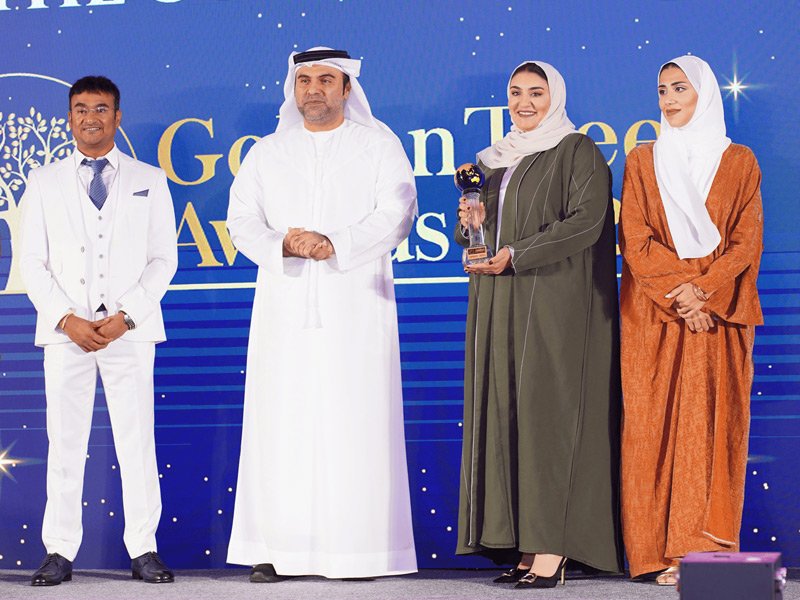
The programme was born from a simple observation: the public servants doing the most consequential work are the least likely to be celebrated for it. The World Public Service Excellence Awards was created to correct that — and 2026 marks its inaugural edition, open to every country and every level of government from day one.
The category framework was designed from the outset to reflect the full system of public value: customer service awards for citizen-facing teams, government innovation awards for digital pioneers, employee recognition awards for workforce programmes, and individual honours including Public Servant of the Year and the Distinguished Public Service Award. The World Public Service Excellence Awards spans more than 40 categories and welcomes entries from national ministries, state governments, city councils, public hospitals, utilities, schools and the non-profits that deliver public services alongside them.
The gala, hosted in Dubai, is designed to bring together government delegations from around the world — a single evening where a city sanitation team from Latin America, a national tax authority from Europe and a rural health programme from Asia share the same stage and the same standard of excellence.
An award is only as valuable as the rigour behind it. The World Public Service Excellence Awards operates under a published governance charter overseen by an independent Awards Integrity Board. The board audits scoring distributions each year, reviews any complaint or appeal, and holds the authority to withdraw an award where evidence is later found to be misrepresented — an authority that protects every honest winner.
Entry information is treated as confidential and used solely for judging. Entrants may mark specific data as restricted, in which case it is visible to jurors but excluded from all publications. Our secretariat operates from Dubai with regional coordinators across the Americas, Europe, Africa, the Middle East and Asia-Pacific, ensuring time-zone-friendly support for every entrant in the public sector awards programme.
The 2026 cycle is our largest yet, with expanded categories for AI in government, climate-resilient services and cross-border collaboration, alongside the established government department awards and civil service awards 2026 honours.

A black-tie evening honouring winners across every category, with keynote addresses from global public-service leaders and the presentation of the Public Service Medal.

Anonymised entries are scored independently by at least five jurors each, followed by moderated panel sessions to confirm finalists and winners.

Entry is free and takes most teams four to six hours of focused work. Our entry guides and advisory reviews help first-time entrants compete on equal footing.
Every awards programme claims prestige; few can explain where theirs comes from. Ours rests on four principles, applied without exception since founding. The first is universality: excellence in public service is not the property of wealthy states. A rural health programme operating on a constrained budget can demonstrate citizen impact as profound as any national digital platform, and our two-stage judging — regional context first, global standard second — exists so that resource-rich and resource-constrained excellence can be honestly compared. Winners’ lists spanning six continents are the evidence that the principle works.
The second is verifiability. Public institutions live under audit, and an award they cite must survive the same scrutiny. That is why claims in winning entries are spot-verified against source documents before any announcement, why referees are contacted, and why the Awards Integrity Board retains published authority to withdraw an honour if material claims later prove false. An award that cannot be checked is a liability for a public body; ours is designed to be evidence.
The third is accessibility. Free nomination is not a promotion — it is structural. The moment entry fees fund a programme, category proliferation and shortlist inflation follow, because revenue depends on volume. Separating our economics from entry decisions keeps every shortlist honest and keeps the door open to the small municipal team whose work deserves the same stage as a national ministry.
The fourth is usefulness. An awards cycle that produces only trophies wastes most of its value. Ours is built to return assessment to the field: every shortlisted entrant receives a written jury evaluation benchmarking their work against the global field, and the annual insights programme converts patterns across thousands of entries into public guidance on measurement, inclusion and service design. The award is the headline; the feedback loop is the institution.
These principles shape practical choices that entrants notice. Deadlines are absolute, because extensions granted to some are unfair to all. Categories are reviewed annually but changed conservatively, because comparability across years is part of an award’s meaning. Lifetime honours — the Public Service Medal and the Distinguished Public Service Award — are withheld in years without a unanimous candidate, because scarcity protects every past and future recipient. And the gala, for all its celebration, is engineered around the closed-door exchange sessions where delegations compare practice candidly, since the point of gathering the world’s best public institutions in one room is what they learn from each other.
We measure our own performance the way we ask entrants to measure theirs: entrant satisfaction with the process, finalists’ assessment of feedback quality, juror retention, and the share of winners whose recognition is later cited in budget, reform or recruitment outcomes. Those numbers are reviewed by the Integrity Board annually — because an organisation that judges others’ excellence must be permanently willing to be judged on its own.
If you arrived here researching whether these awards are right for your institution, the honest summary is this: the World Public Service Excellence Awards is built for organisations that want their results examined, not merely applauded. Entry is free, the criteria are published, the jury is named, and the feedback is real. If your team has twelve months of evidence and the willingness to write it down honestly, you belong in the field — whether you are a national ministry or a unit of five. Begin with the category framework, read one criteria pack end to end, and write to events@goldentreeevent.com with whatever question remains. That first email has started the journey of nearly every name now on our winners’ page.
Your team’s work deserves an independent verdict. Enter the 2026 World Public Service Excellence Awards today.